Johann Sebastian Bach’s Inventions: A Comprehensive Overview
Bach’s Inventions, BWV 772-786, are readily available as PDF downloads from resources like MutopiaProject and IMSLP, offering free access to these keyboard works․
These digital scores, typeset with LilyPond, are licensed under Creative Commons, allowing distribution and modification for study and performance purposes․
Freesheetmusic․net also provides a convenient PDF compilation of the Inventions, facilitating exploration of Bach’s compositional ingenuity for musicians globally․
Historical Context of the Inventions
Johann Sebastian Bach composed the Inventions, formally titled “Musical Offering,” around 1720 during his tenure as Kapellmeister in Köthen․ This period marked a shift in his compositional focus, moving away from large-scale orchestral works towards more intimate keyboard pieces․
The Inventions emerged within a broader European trend of pedagogical keyboard literature, designed to instruct students in counterpoint and compositional techniques․ However, Bach’s approach transcended mere instruction; he aimed to demonstrate the principles of harmony and invention through elegant and musically compelling examples․
The availability of these works as PDF scores today, through platforms like MutopiaProject and IMSLP, reflects a democratization of access to Bach’s genius․ Originally intended for didactic purposes, the Inventions quickly gained recognition as significant artistic achievements, influencing generations of composers and performers․ The digital format ensures their continued study and performance in the 21st century․
The initial title, “Invention,” suggested a focus on exploring compositional ideas, while the later consideration of “Sinonia” (meaning “after the style of”) hinted at a more imitative approach, ultimately reflecting Bach’s complex artistic intentions․
Bach’s Pedagogical Intentions
Bach’s Inventions were explicitly conceived as a learning tool, designed to cultivate a student’s understanding of counterpoint, harmony, and keyboard technique․ He intended them to be more than mere exercises; they were meant to be aesthetically pleasing and musically engaging examples of compositional principles․
The availability of these works as PDF downloads from sources like IMSLP and MutopiaProject facilitates their continued use in music education․ Bach aimed to teach students to play cleanly, with evenness of touch and clarity of articulation, skills essential for mastering complex polyphonic textures․
The structured nature of the Inventions – their clear melodic lines and logical harmonic progressions – provides a framework for analyzing compositional techniques․ Students can learn to identify motifs, understand voice leading, and appreciate the interplay between different musical ideas․ The digital PDF format allows for easy annotation and study․
Ultimately, Bach’s pedagogical goal was to empower students to become independent and creative composers themselves, capable of applying the principles demonstrated in the Inventions to their own musical endeavors․
The Title: “Invention” vs․ “Sinonia”
Initially, Bach referred to these pieces as “Inventions,” suggesting a focus on demonstrating compositional techniques – a ‘discovering’ of musical ideas․ However, he later considered renaming them “Sinonia,” derived from the Italian “sinfonia,” implying a more complex, symphonic quality․
The shift in terminology reflects Bach’s evolving perception of the works․ While the term “Invention” highlights their didactic purpose, “Sinonia” acknowledges their artistic merit and sophisticated construction․ Accessing these pieces as PDF scores from platforms like MutopiaProject doesn’t reveal this historical nuance directly, but encourages deeper research․
Ultimately, “Invention” stuck, and the title remains synonymous with these foundational keyboard pieces․ The readily available PDF versions allow modern musicians to explore the compositional ‘inventions’ within, regardless of the debated title․ The choice of terminology underscores Bach’s meticulous approach to both teaching and composition․
The enduring legacy of the Inventions lies in their ability to simultaneously educate and inspire, a testament to Bach’s genius․
The Fifteen Two-Part Inventions (BWV 772)
Bach’s BWV 772 Inventions, available as PDF scores, showcase contrapuntal mastery in two voices, offering foundational keyboard study material for musicians․
Overview of BWV 772
BWV 772 comprises the first fifteen Inventions, meticulously documented and freely accessible as PDF sheet music through platforms like the Mutopia Project and IMSLP․ These pieces, originally titled “Inventions,” represent a cornerstone of keyboard literature, designed for both educational purposes and artistic expression․

The digital scores, often typeset using LilyPond, are distributed under Creative Commons licenses, granting users the freedom to download, modify, and perform these works․ The availability of these PDF versions significantly democratizes access to Bach’s music, allowing students and performers worldwide to engage with his compositional techniques․
Each Invention within BWV 772 is a concise, two-part composition, exploring a single musical idea through intricate counterpoint․ These pieces are not merely exercises; they are fully realized musical statements, demonstrating Bach’s genius for melodic invention and harmonic richness․ The PDF format allows for convenient printing and annotation, aiding in detailed study and performance preparation․
Common Characteristics of the Inventions
Across both sets, BWV 772 and BWV 786, Bach’s Inventions share several defining characteristics, readily observable in the freely available PDF scores from sources like IMSLP and MutopiaProject․ A primary feature is their contrapuntal texture, where two or three independent melodic lines intertwine harmoniously․
These pieces are generally concise, typically lasting only a few minutes in performance, and are structured around a single, clear musical idea․ The PDF format allows for easy visual analysis of this thematic development․ Furthermore, the Inventions prioritize clarity of voice leading and harmonic progression, making them excellent pedagogical tools․
While varying in key and complexity, all Inventions demonstrate Bach’s mastery of invertible counterpoint and motivic development․ Accessing these works as PDF downloads facilitates close study of these techniques, enabling musicians to understand and appreciate the depth of Bach’s compositional craft․
Key Signatures and Range of Difficulty
The Inventions, conveniently available as PDF scores from platforms like IMSLP and the Mutopia Project, encompass all major and minor keys, providing a comprehensive harmonic landscape for study․ BWV 772 (two-part) begins with C major and progresses systematically through the keys, while BWV 786 (three-part) presents a more varied sequence․
Regarding difficulty, the two-part Inventions (BWV 772) generally pose a lesser technical challenge than the three-part Inventions (BWV 786)․ The PDF format allows performers to visually assess the complexity of each piece․ Early Inventions, like No․ 1 in C major, are often recommended for intermediate students․
However, even the seemingly simpler Inventions demand precise articulation, independent hand coordination, and a nuanced understanding of counterpoint․ Downloading the PDF versions enables detailed practice and analysis, aiding musicians in mastering these foundational keyboard works by Bach․

Detailed Analysis of Invention No․ 1 in C Major (BWV 772)
Bach’s Invention No․ 1 in C Major, easily accessible as a PDF, showcases a clear melodic structure and harmonic simplicity, ideal for analysis․
Melodic Structure and Motifs
Invention No․ 1 in C Major, readily available as a PDF score, is built upon a remarkably concise and memorable melodic motif․ This primary subject, presented initially in the right hand, is characterized by its stepwise motion and clear articulation, forming the foundation of the entire piece․
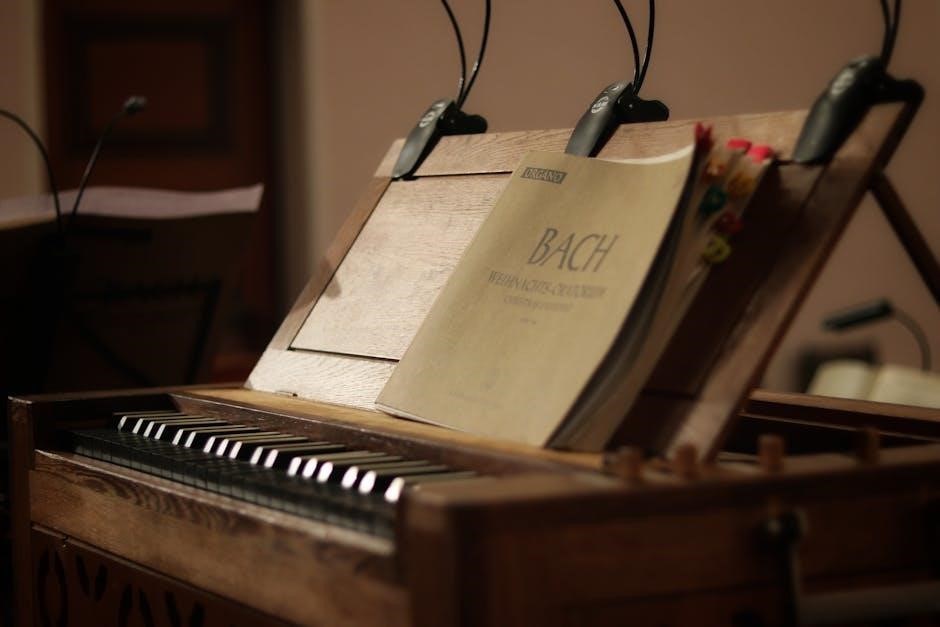
Bach masterfully develops this motif through imitation, inversion, and sequence, creating a continuous interplay between the two voices․ The melodic lines are remarkably balanced, with each voice contributing equally to the overall harmonic and contrapuntal texture․ The simplicity of the initial motif allows for a focused exploration of its potential, demonstrating Bach’s genius in extracting maximum musicality from minimal material․
Analyzing the PDF reveals how Bach subtly alters the motif’s rhythm and contour throughout the invention, maintaining its recognizable character while introducing variations that enhance the musical interest․ This careful manipulation of a single melodic idea is a hallmark of Bach’s compositional style․
Harmonic Progression and Counterpoint
Examining the PDF score of Invention No․ 1 in C Major reveals a predominantly diatonic harmonic language, firmly rooted in the key of C Major․ Bach employs a clear and logical harmonic progression, primarily utilizing tonic, dominant, and subdominant chords, creating a sense of stability and coherence․
However, the harmonic interest is significantly enhanced by the intricate counterpoint․ The two voices engage in a constant dialogue, with the subject and countersubject weaving together to create a rich and complex texture․ Bach’s masterful use of imitation and inversion ensures that the harmonic progression is never static, but rather dynamically shaped by the interplay of the melodic lines․
The PDF clearly demonstrates how Bach avoids overly complex or chromatic harmonies, prioritizing clarity and contrapuntal ingenuity․ This focus on counterpoint, rather than harmonic color, is a defining characteristic of the Inventions․
Rhythmic Features and Articulation
Analyzing the PDF score of Bach’s Invention No․ 1 in C Major reveals a consistent and driving rhythmic pulse, primarily characterized by even eighth notes․ This rhythmic uniformity provides a foundational stability upon which the contrapuntal lines unfold․ However, Bach subtly varies the rhythmic profile through the interplay of the two voices․
The PDF notation indicates a generally detached articulation, suggesting a light and clear touch․ While not explicitly marked, performers often interpret the eighth notes as slightly separated, enhancing the clarity of the individual voices․ The articulation should facilitate the distinct presentation of the subject and countersubject;
Subtle rhythmic displacements and syncopation add a layer of sophistication, preventing the rhythmic texture from becoming monotonous․ Careful study of the PDF reveals Bach’s nuanced approach to rhythm, balancing regularity with subtle variations․
Form and Structure of Invention No․ 1
Examining the PDF score of Bach’s Invention No․ 1 in C Major reveals a remarkably concise and tightly-knit structure․ The piece adheres to a two-part invention form, built upon the exposition of a primary subject and a countersubject․ The PDF clearly displays the initial presentation of the subject in the right hand, immediately followed by its answer in the left․
Subsequent sections feature episodes – passages where the subject is fragmented or absent – interspersed with further statements of the subject in various keys․ The PDF allows for easy tracing of these subject entries, demonstrating Bach’s masterful contrapuntal technique․
The overall form can be described as a modified binary structure, with a clear sense of harmonic and thematic closure․ The PDF score highlights the symmetrical arrangement of material, contributing to the piece’s overall sense of balance and proportion․

Technical Aspects for Performers
PDF scores aid performers in mastering fingering, tempo, and articulation; careful study reveals Bach’s intentions for nuanced phrasing and expressive musicality․
Detailed editions offer suggested fingerings, enhancing technical facility and clarity within these demanding keyboard works․
Fingering Considerations
Fingering in Bach’s Inventions, accessible through PDF scores from IMSLP and MutopiaProject, is crucial for navigating the contrapuntal textures and maintaining clarity of individual voices․
While many editions provide suggested fingerings, performers should critically evaluate them, adapting to their hand size and technical strengths․
Prioritize fingerings that facilitate smooth voice leading, minimizing awkward shifts and ensuring legato phrasing, especially in the two and three-part Inventions․
Consider fingerings that anticipate harmonic changes and melodic contours, allowing for seamless transitions between phrases․
Experiment with alternative fingerings to discover optimal solutions for challenging passages, always prioritizing musical expression over technical convenience․
The availability of PDF formats allows for annotation and personalized fingering adjustments directly onto the score, fostering a deeper connection with the music․
Remember that effective fingering is not merely about efficiency, but about enabling a nuanced and expressive interpretation of Bach’s masterful compositions․
Tempo and Dynamics
Determining appropriate tempo and dynamics in Bach’s Inventions, readily studied via PDF scores from sources like IMSLP, requires careful consideration of their contrapuntal nature․
While Bach provided limited dynamic markings, modern performance practice favors a terraced dynamic approach, emphasizing the interplay between voices․

Moderate tempos generally suit the Inventions, allowing for clarity of articulation and rhythmic precision, as evidenced in available PDF editions․
Avoid excessive speeds that compromise the contrapuntal texture; instead, prioritize a balanced and nuanced presentation of each melodic line․
Subtle dynamic contrasts can enhance the musical interest, highlighting important motifs and creating a sense of forward motion․
The PDF format facilitates detailed score study, enabling performers to analyze harmonic progressions and melodic contours to inform dynamic choices․
Ultimately, the goal is to convey Bach’s intellectual rigor and emotional depth through a thoughtful and expressive interpretation of these timeless works․
Articulation and Phrasing
Effective articulation and phrasing are crucial for bringing Bach’s Inventions to life, and detailed study of PDF scores from sites like MutopiaProject aids in this process․
A generally detached touch, often described as non legato, helps to delineate the individual voices within the contrapuntal texture․
However, avoid a harsh or percussive sound; instead, strive for a nuanced articulation that balances clarity with musicality․
Phrasing should be guided by the harmonic structure and melodic contours, as revealed in the readily available PDF versions․
Subtle variations in touch and dynamics can shape phrases and create a sense of direction and momentum․
Pay attention to the interplay between voices, shaping each line with sensitivity and awareness of its relationship to the others․
The PDF format allows for close examination of Bach’s notation, revealing subtle cues regarding articulation and phrasing preferences․

The Thirteen Three-Part Inventions (BWV 786)
BWV 786, the three-part Inventions, are accessible as PDF scores on IMSLP, presenting increased contrapuntal density and harmonic complexity for performers․
Overview of BWV 786
BWV 786 comprises the thirteen three-part Inventions, representing a significant escalation in compositional challenge compared to their two-part counterparts (BWV 772)․ These pieces, readily available as PDF downloads from the International Music Score Library Project (IMSLP), showcase Bach’s masterful command of counterpoint and harmonic intricacy․
The IMSLP provides access to meticulously typeset scores, often utilizing LilyPond, ensuring clarity and accuracy for study and performance․ These digital editions are typically offered under Creative Commons licenses, promoting free distribution and adaptation for educational purposes․ The collection demonstrates Bach’s pedagogical intent, designed to cultivate a deep understanding of compositional techniques․
Each Invention within BWV 786 presents a unique exploration of three independent melodic lines interwoven with precision and elegance․ The PDF format allows for convenient printing and annotation, aiding musicians in dissecting the complex textures and harmonic progressions inherent in these works․ Studying these scores reveals Bach’s systematic approach to musical structure and his profound influence on subsequent composers․
Increased Complexity Compared to Two-Part Inventions
The transition from the two-part Inventions (BWV 772) to the three-part Inventions (BWV 786) marks a substantial increase in compositional and performance demands․ Accessing these scores as PDF documents from resources like IMSLP reveals the heightened contrapuntal density․ Where BWV 772 focuses on dialogue between two voices, BWV 786 introduces a third, demanding greater independence of lines․
This added voice necessitates a more sophisticated understanding of harmonic implications and voice leading․ The PDF scores clearly illustrate the intricate interplay between the melodic lines, requiring performers to maintain clarity and balance․ Analyzing these scores, often typeset using LilyPond, highlights Bach’s masterful control of texture․
Successfully navigating BWV 786 requires a heightened ability to perceive and articulate independent musical ideas simultaneously․ The freely available PDF editions facilitate detailed study, allowing musicians to unravel the complexities and appreciate the depth of Bach’s compositional genius․
Challenges in Performance of Three-Part Inventions
Performing the three-part Inventions (BWV 786), readily available as PDF scores from IMSLP and other online repositories, presents unique challenges for keyboardists․ Maintaining clarity of each independent voice is paramount, demanding exceptional finger dexterity and a refined sense of articulation․ The PDF format allows for detailed score study, crucial for identifying contrapuntal lines․
Balancing the dynamic and rhythmic weight of each voice requires careful consideration, preventing any single line from dominating the texture․ The increased complexity, visible in the PDF notation, necessitates a strong understanding of harmonic progression and voice leading;
Furthermore, coordinating the three voices demands significant mental agility and a well-developed inner ear․ Accessing these scores as PDFs enables focused practice, allowing musicians to isolate and refine individual lines before integrating them into a cohesive performance of Bach’s intricate compositions․

Resources for Studying and Performing the Inventions
PDF scores of Bach’s Inventions are freely accessible via MutopiaProject and IMSLP, offering convenient study and performance materials for musicians globally․
Availability of Sheet Music (Mutopia Project, IMSLP)
Johann Sebastian Bach’s Inventions, cataloged as BWV 772-786, benefit from excellent accessibility thanks to dedicated online resources․ The Mutopia Project ( mutopiaproject․org) provides high-quality PDF sheet music, specifically offering Invention No․ 1 in C Major as a prime example․ These editions are typeset using LilyPond, ensuring clarity and readability․
Furthermore, the International Music Score Library Project (IMSLP) ( imslp․org) hosts a comprehensive collection of all fifteen Inventions, also in PDF format․ Both platforms operate under Creative Commons Attribution-ShareAlike 3․0 licenses, granting users the freedom to download, distribute, modify, and perform the music without restriction․
These resources are invaluable for students, teachers, and performers seeking affordable and legally accessible scores of Bach’s foundational keyboard works․ The availability of these PDF versions significantly lowers the barrier to entry for studying and mastering these pieces․
Online Tutorials and Masterclasses
While readily available PDF scores from sources like MutopiaProject and IMSLP provide the foundational material, numerous online resources enhance the learning experience for Bach’s Inventions․ A wealth of video tutorials on platforms like YouTube offer detailed analyses of individual Inventions, focusing on technique, interpretation, and musicality․
These tutorials often dissect complex passages, providing fingering suggestions and insights into Bach’s compositional techniques․ Furthermore, several platforms host online masterclasses led by experienced musicians and pedagogues․ These interactive sessions allow students to receive personalized feedback and guidance on their performance․
Searching for “Bach Inventions tutorial” or “Bach Inventions masterclass” yields a diverse range of options, catering to various skill levels․ Supplementing score study with these digital learning tools accelerates progress and deepens understanding of these essential keyboard works, even when working with a PDF․
Recommended Editions and Fingerings
When utilizing PDF scores from sources like IMSLP or MutopiaProject for Bach’s Inventions, considering supplemental editorial material is beneficial․ While the free PDFs offer the notes, they often lack detailed fingerings or performance suggestions․ Several published editions provide valuable insights․
The Henle Verlag edition is highly regarded for its scholarly approach and clear engraving․ Alfred Masterworks editions also present reliable texts with suggested fingerings․ Exploring multiple editions can expose different interpretive possibilities and fingering choices․
However, remember that fingering is ultimately a personal decision․ Experimenting with various options, considering hand size and technical strengths, is crucial․ Online forums and communities dedicated to Bach performance often discuss effective fingerings for specific passages, complementing the PDF score․

The Inventions’ Influence on Subsequent Composers
Bach’s Inventions, accessible via PDF, profoundly impacted later composers, shaping fugal development and keyboard literature, inspiring generations of musicians․
Impact on the Development of Fugue
Bach’s Inventions, easily studied through readily available PDF scores from sources like IMSLP and MutopiaProject, served as crucial stepping stones in the development of the fugue, a more complex contrapuntal form․
While not fugues themselves, the Inventions demonstrate core principles – thematic development, invertible counterpoint, and motivic working – in a concise and accessible manner, preparing students for the intricacies of fugal writing․
The clear presentation of two or three melodic lines, downloadable as PDF documents, allows for a focused understanding of how independent voices interact and build harmonic structures․
Composers following Bach directly benefited from this pedagogical approach, utilizing the techniques showcased in the Inventions to construct more elaborate fugues, evidenced in the works of composers like Mozart and Beethoven․
The PDF format facilitates detailed analysis, enabling musicians to trace the evolution of contrapuntal ideas and appreciate Bach’s foundational contribution to the art of fugue․
Influence on Later Keyboard Literature
Bach’s Inventions, conveniently accessible as PDF downloads from platforms like IMSLP and MutopiaProject, profoundly influenced subsequent keyboard literature, establishing a new standard for technical proficiency and musical expression․
The concise, two- and three-part structures, readily available in PDF format, provided a model for composers seeking to explore contrapuntal textures within smaller-scale keyboard works․
Composers like Beethoven and Chopin directly engaged with Bach’s techniques, incorporating elements of his invention style into their own compositions, enriching the harmonic and melodic language of the piano․
The emphasis on finger independence and clarity of articulation, easily studied through the PDF scores, became hallmarks of keyboard pedagogy and performance practice․
The enduring popularity of the Inventions, evidenced by their continued presence in modern curricula and online resources offering PDF access, demonstrates their lasting impact on keyboard repertoire․
Continuing Relevance in Modern Music Education
Bach’s Inventions, widely available as free PDF downloads from sources like IMSLP and the Mutopia Project, remain cornerstones of modern music education, fostering crucial skills for aspiring musicians․
The readily accessible PDF scores facilitate focused study of counterpoint, harmony, and voice leading, providing a foundational understanding of musical structure․
These pieces, easily printed or viewed digitally as PDF documents, cultivate finger independence, coordination, and a refined sense of articulation – essential for technical development․
The Inventions encourage analytical listening and performance practice, prompting students to explore musical phrasing and interpretative nuance, all supported by the clarity of the PDF notation․
Their concise form and pedagogical intent make them ideal for introducing students to the complexities of Bach’s compositional style, ensuring their continued relevance in contemporary musical training․